 CompanySweeper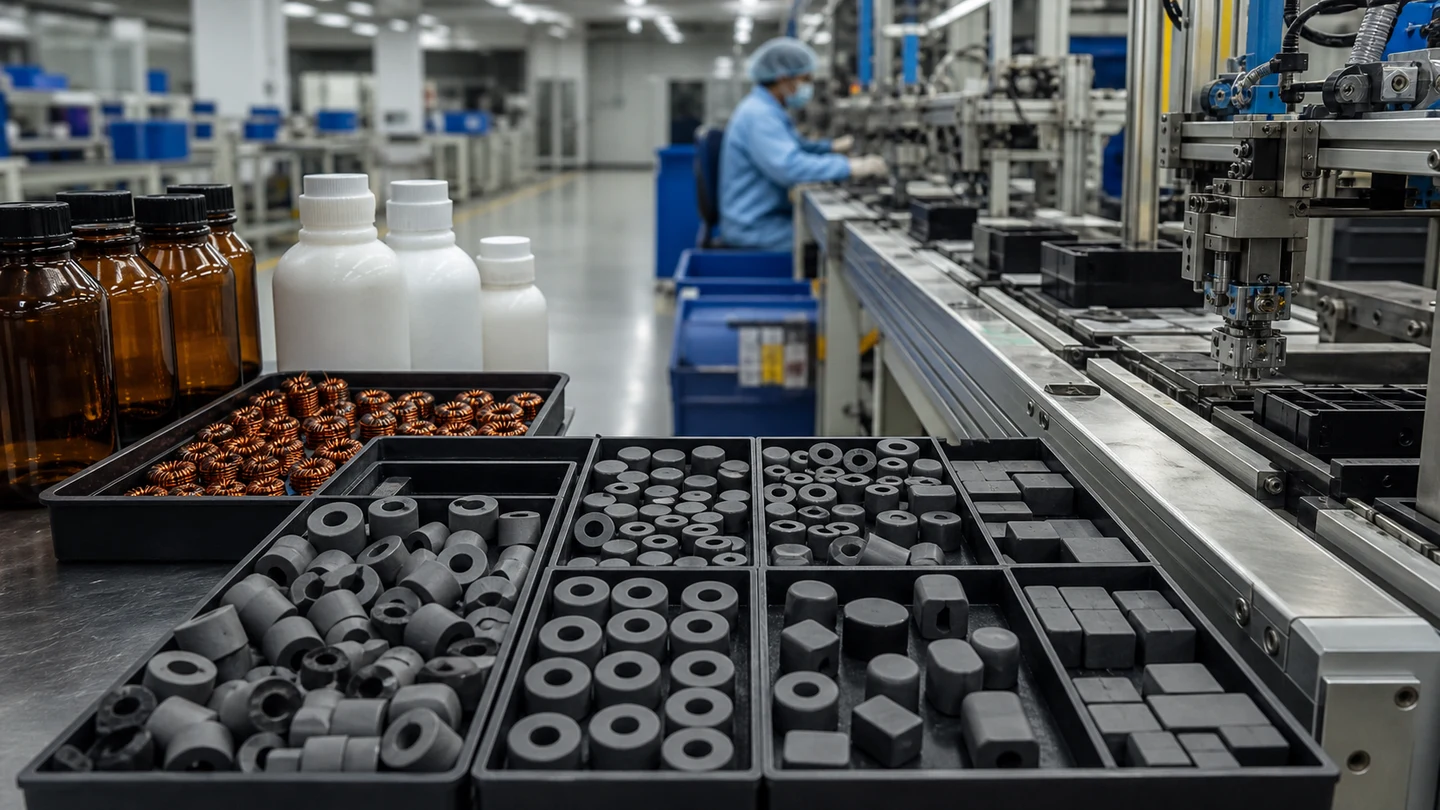
The catalyst
India approved 31 more projects under the Electronics Component Manufacturing Scheme on August 17, involving ₹7,877 crore. The important detail is not the size of the announcement alone. The tranche includes filters, coils, speakers, acetylene black and electrolyte additives, as well as machinery for electronics factories. That moves the policy from assembling finished devices toward building the inputs and tools that determine how much of the value chain can operate locally. [6a381e82] [87cf9d33]News sourcestheprint.inBusinessLine
The company-level mechanism is straightforward but easy to overstate. More local components can reduce import dependence, shorten qualification loops and give electronics manufacturers a denser supplier base. They do not automatically create profitable capacity: ₹69,548 crore is cumulative committed investment, not deployed capital or output. The useful question is therefore where a listed company already makes a named input, and where the link remains a conditional downstream benefit. [337bb050] [9bd581a4]News sourcesBusiness Standardmoneycontrol.com
In brief
What matters
- The bottleneck is moving upstreamThe fifth tranche covers raw materials and machinery, suggesting that policy is targeting the layers that assembly plants still depend on imports to supply.
- Neogen has the clearest product linkNeogen already makes lithium-based specialty chemicals and reports electrolyte-plant trials and customer validation, giving the policy a specific chemistry-to-capacity pathway.
- Small component makers show the depthCosmo Ferrites makes Mn-Zn soft-ferrite cores and powder used in power electronics, a closer match to the coils and filters named in the announcement than a generic EMS label.
- Downstream exposure is conditionalSahasra and EPACK have electronics and component capabilities, but their evidence supports a possible demand or integration benefit rather than a confirmed ECMS award.
Company landscape
How the catalyst reaches listed businesses
Which listed Indian companies produce the raw materials, components or manufacturing capacity that the fifth ECMS tranche is designed to deepen?
The policy is filling the middle of the stack
India’s electronics story has often been measured through phones, appliances and exports. The new ECMS approvals point to a less visible constraint: a factory can assemble a product locally while still importing the chemicals, magnetic materials, sub-components and equipment that make production possible. The government says the 106 sanctioned projects now span 30 product categories and 15 states. That breadth matters because a supply chain becomes more resilient through several linked manufacturing steps, not one headline plant. [6a381e82] [3a9f4be2]News sourcestheprint.innewindianexpress.com
The immediate investor mistake would be to treat every announced rupee as revenue. The supplied reporting distinguishes commitments from production, and reports that some earlier plants are operational or nearing commissioning without attributing those milestones to every new applicant. The first test is execution: plant commissioning, customer qualification and commercial shipments must appear before the scheme changes earnings. [337bb050] [793f6bad]News sourcesBusiness StandardNDTV Profit
Neogen and Cosmo make the mechanism concrete
Neogen Chemicals is the strongest direct fit in the saved evidence. It manufactures bromine- and lithium-based specialty chemicals, and its disclosures say mechanical assembly of an electrolyte plant is complete, trial runs have started and validation with a leading domestic cell maker is progressing. It also reports provisional approvals from four international customers. That is not proof of ECMS funding or commercial scale, but it shows the kind of intermediate input the policy is trying to make available inside India: a chemical product that sits between raw materials and a battery cell.
Cosmo Ferrites sits at a smaller but revealing point in the chain. It makes Mn-Zn soft-ferrite cores and powder for power electronics, with disclosed capacity of 3,600 tonnes for each. The company is not shown as an ECMS awardee in the saved sources, so it belongs here as an adjacent component comparison. Its value is analytical: if the scheme succeeds, domestic electronics growth should eventually be visible in orders for specialised magnetic components, not only in the output of final assemblers.
The downstream names need proof of conversion
Sahasra Electronic Solutions is an adjacent downstream comparison. It runs EMS, memory, semiconductor-packaging and IT-hardware businesses; its evidence reports eight SMT lines, with the Noida facility at about 80% utilisation and Bhiwadi at about 20%. A deeper domestic component base could reduce sourcing friction for such a manufacturer, but the saved record does not connect Sahasra to the 31 approved projects. The relevant signal would be a change in input sourcing, customer programmes or utilisation, not a thematic mention of ECMS.
EPACK Durable provides a different boundary. It makes consumer durables and components, and management says investments in backward integration are intended to improve value addition and supply-chain resilience. Its FY26 presentation shows component revenue rising to ₹3,663 million from ₹1,807 million, but that is company-wide operating evidence, not evidence of an ECMS award or a guaranteed policy benefit. EPACK becomes relevant only if domestic component availability helps its own factories win more work or improve economics.
Taken together, these companies separate the thesis into two stages. Neogen and Cosmo illustrate the upstream inputs that make localisation tangible; Sahasra and EPACK illustrate the demand that might follow if those inputs arrive at the right quality, price and scale. The policy is promising because it addresses that missing middle. It is unproven because no saved evidence yet shows that the new projects have reached customers. [87cf9d33]News sourceBusinessLine
Questions for the next filing
What would prove the connection?
- 1
Which selected companies make a product named in the approved ECMS categories?
- 2
Which companies are downstream manufacturers that could benefit only if domestic component supply becomes reliable?
- 3
What disclosures would show that approved investment has become operating capacity and customer revenue?
Risks and limits
What could break the argument?
- Approved investment may remain a commitment: delays in machinery, commissioning, customer qualification or working capital could leave import dependence unchanged.
- Local production may not be cost-competitive or technically accepted at scale. Domestic buyers could continue importing if quality, price or reliability is better elsewhere.
Keep following the thread
What we would check next
- Commissioning dates, installed capacity and commercial shipments disclosed by ECMS beneficiaries.
- Neogen’s final electrolyte-plant approvals, customer qualification and recurring sales.
- Cosmo Ferrites’ orders, utilisation and capacity additions in ferrite powder and cores.
- Sahasra and EPACK disclosures showing domestic sourcing, customer wins, component revenue or factory utilisation changing after the new projects.
- Whether the next ECMS updates identify operational output rather than only sanctioned investment.
Have a catalyst or business question of your own?
Use CompanySweeper to find the companies behind it.
Try this question free →Research basis · 15 records reviewed
The narrative was checked against 9 company records and 6 topical sources. News links also appear beside the paragraphs that rely on them.
- Centre clears Rs 7,877 cr proposals for 31 electronics components17 August 2026
- ECMS expanded with nod for 31 projects at ₹7,877 crore outlay17 August 2026
- Govt approves 31 proposals under ECMS17 August 2026
- Kaynes, Dixon, Wipro plants to go live soon17 August 2026
- Government asks electronics industry to deepen design and supply chain17 August 2026
- Centre clears 31 more ECMS projects17 August 2026
Research for idea discovery, not a recommendation to buy or sell securities.