 CompanySweeper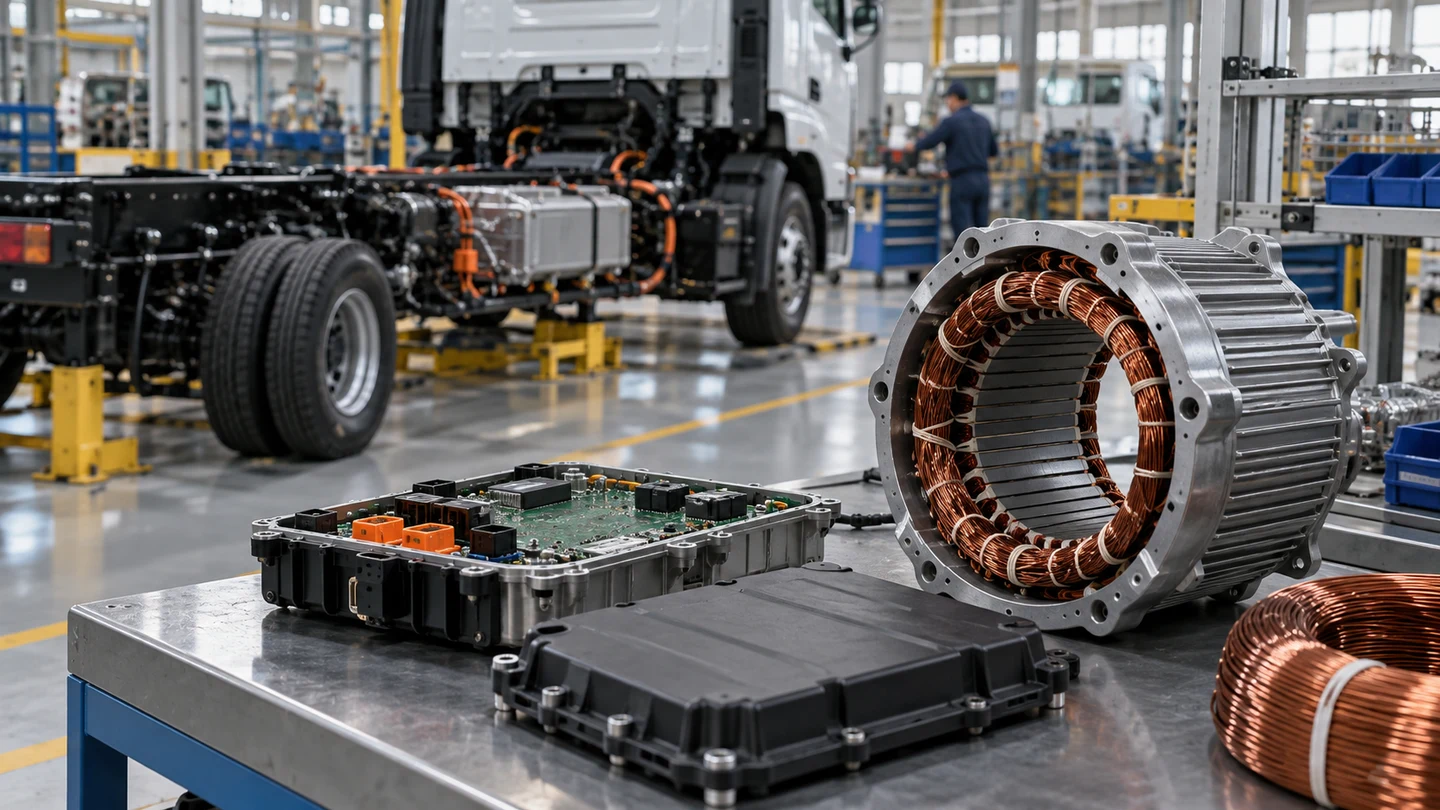
The catalyst
From 1 April 2027, the PM E-DRIVE rules reported for N2 electric trucks would require electronic components, semiconductors and connectors to be assembled onto the circuit board in India. The same package adds domestic work on high-voltage connectors, cables, heatsinks, enclosures and firmware, while specified e-bus traction-motor assembly is already part of the reported localisation path. The immediate consequence is not a guaranteed order. It is a deadline for OEMs to redesign, qualify and prove a local manufacturing chain.News sourcesCNBC-TV18newkerala.com
That distinction matters for investors. A controller assembled in India can create work for electronics, power-conversion and vehicle-system suppliers, but only after the part is technically accepted, volumes are assigned and factories can meet the process. The strongest company evidence therefore sits upstream of the headline: KSH International makes specialised wires used in traction motors and EVs; other candidates offer drivetrain, traction or heavy-electric-vehicle capabilities without saved evidence of a specific N2 truck programme. This is a qualification race before it is a revenue forecast.
In brief
What matters
- The deadline changes the work contentThe rule is aimed at where components are assembled, not merely where a vehicle is finally put together. That can shift spending toward board assembly, wiring, thermal hardware, firmware integration and testing.
- KSH is the clearest direct component linkKSH's saved evidence places specialised winding wires in traction motors and EVs, with more than 120 OEM customers and capacity expanding from 43,445 tonnes toward roughly 59,000 tonnes by FY27.
- Adjacent does not mean awardedDivgi, Hind Rectifiers and Ravindra Energy show relevant drivetrain, traction and heavy-EV capabilities, but the saved record does not prove that any is a named beneficiary of this PM E-DRIVE change.
- The observable test is qualificationThe useful evidence will be a compliant controller or motor programme, a customer nomination, local capacity investment and shipment or revenue disclosure—not another policy announcement.
Company landscape
How the catalyst reaches listed businesses
Assess Indian-listed companies exposed to PM E-DRIVE localisation of N2 e-truck controllers and e-bus traction-motor components. Distinguish direct suppliers from adjacent EV, drivetrain and power-electronics companies.
The policy creates a manufacturing deadline, not demand by itself
The reported April 2027 requirement reaches inside the vehicle. N2 makers would need domestic assembly of electronic components, semiconductors and connectors on the printed circuit board, alongside earlier localisation of high-voltage connectors, cables, heatsinks, enclosures and firmware. For e-buses, the reported package covers rotor and stator assembly, bearings, enclosures, connectors and cables. These are process requirements with a clock attached.News sourcesCNBC-TV18newkerala.com
The economics depend on who bears the conversion cost. OEMs may need new lines, testing and supplier audits; component makers may need tooling, local inventory and process controls. Local assembly can enlarge the supplier pool, but returns may be competed away. The missing facts are current OEM localisation levels, required capacity and the enforcement path.News sourceCNBC-TV18
KSH makes the motor requirement tangible
KSH International is the strongest direct operating link in the saved Discovery set. It manufactures specialised magnet winding wires, including products for traction motors and EVs, and sells to more than 120 domestic and global OEMs. Its evidence describes a make-to-order model in which copper is passed through while profitability depends on value added per tonne. That is a more precise exposure than calling the company an EV beneficiary: KSH supplies a motor-critical input, while the rule concerns a broader vehicle and controller assembly chain.
Capacity is the next part of the case. KSH reported 43,445 tonnes of installed capacity at June 2026 and a path toward roughly 59,000 tonnes by the end of FY27. The company also reported a five-year framework agreement with a leading global OEM. None of that proves a PM E-DRIVE nomination, but it shows how an Indian supplier can benefit if local electric-vehicle and traction production becomes qualified purchase orders.
Three comparisons mark the edge of the thesis
Divgi TorqTransfer is an adjacent comparison because it designs and makes EV transmissions and supplies vehicle OEMs, including Mahindra and Tata Motors. Its FY26 evidence shows a profitable Tier-1 drivetrain business and engagement with an Indian EV manufacturer, but it does not identify N2 truck controllers, e-bus motors or this localisation programme. Its relevance is the value-chain contrast: a transmission supplier could gain from electric platforms without being the component named in the rule.
Hind Rectifiers is another adjacent boundary. Its saved evidence describes power electronics, traction systems, converters, semiconductors and a move from individual components toward integrated railway systems. Ravindra Energy is a conditional heavy-EV comparison: its subsidiary supplies heavy-duty e-tractors and has reported units sold and planned manufacturing capacity, but an e-tractor is not an N2 e-truck and the evidence contains no controller nomination under PM E-DRIVE.
Questions for the next filing
What would prove the connection?
- 1
Which company actually makes a component or system that the localisation rules touch, and which is only adjacent?
- 2
What evidence shows manufacturing capability, OEM qualification, capacity or an existing programme?
- 3
What disclosure would turn the April 2027 deadline into reported revenue, margin or capital expenditure?
Risks and limits
What could break the argument?
- The reported rules are a future compliance milestone, and the supplied news does not identify affected OEMs, current localisation levels, required capacity or whether enforcement could change.
- Supplier capability does not equal nomination. Qualification delays, low volumes or price-led localisation could leave capable companies with investment and working-capital costs but little incremental revenue.
- KSH's copper pass-through model limits the meaning of reported revenue growth, while its capacity expansion still carries execution risk; motor-wire demand must show up in value added, utilisation and customer programmes.
Keep following the thread
What we would check next
- A final or clarified PM E-DRIVE notification naming the covered vehicle classes, assembly steps and enforcement date.
- OEM disclosures on Indian PCB, controller, motor and traction-component capacity, supplier nominations and qualification milestones.
- KSH capacity utilisation, EV or traction-motor mix, value added per tonne and any commercial-vehicle programme disclosure.
- Divgi, Hind Rectifiers or Ravindra Energy disclosures that move from capability to a named customer, product and shipment.
- Whether local assembly raises system cost, improves reliability or simply changes the supplier bill of materials.
Have a catalyst or business question of your own?
Use CompanySweeper to find the companies behind it.
Try this question free →Research basis · 12 records reviewed
The narrative was checked against 10 company records and 2 topical sources. News links also appear beside the paragraphs that rely on them.
Research for idea discovery, not a recommendation to buy or sell securities.