 CompanySweeper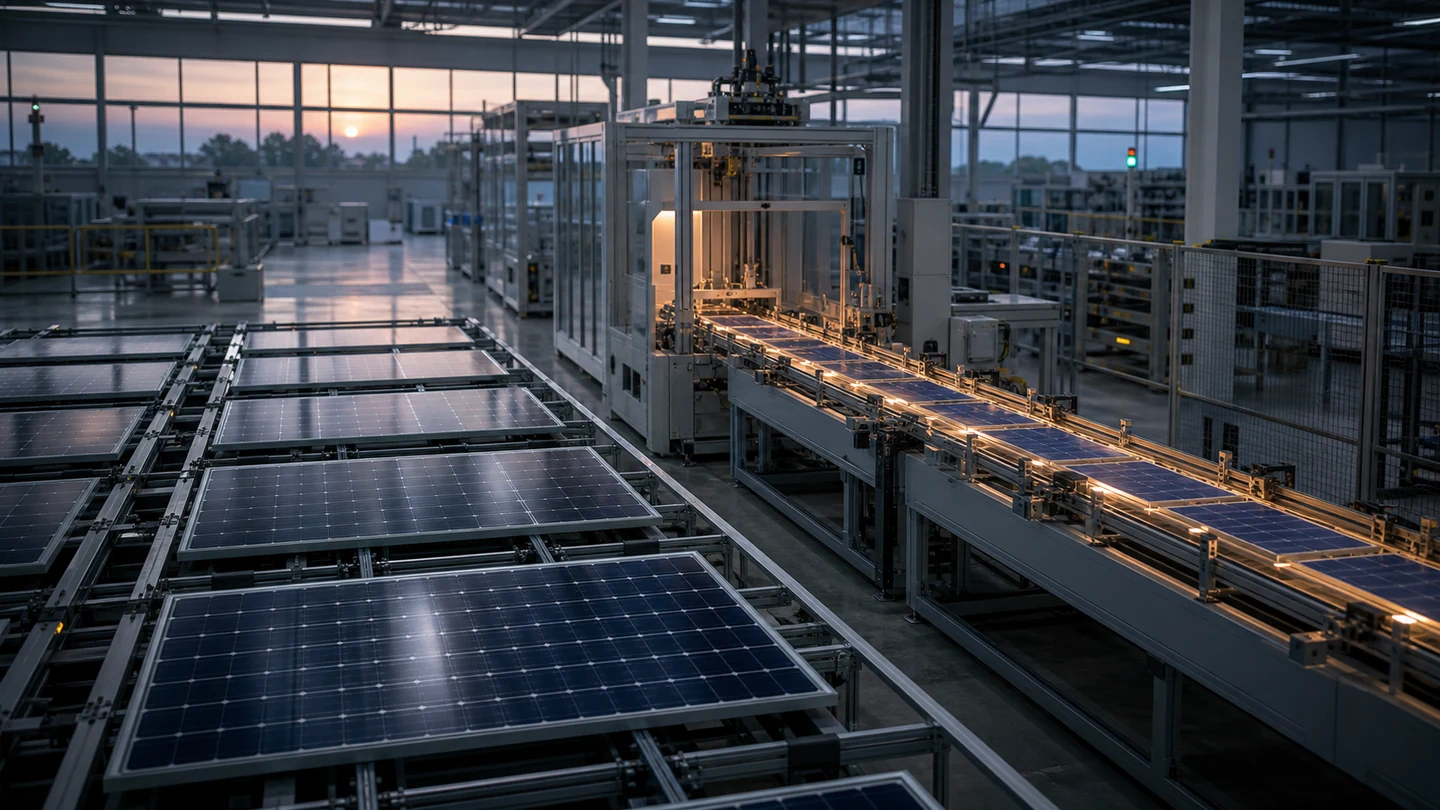
The catalyst
India's solar factories have run into a shortage one step before the finished panel. From 1 June, projects covered by the Approved List of Models and Manufacturers, or ALMM, were meant to use domestically made cells as well as modules. Yet reported cell capacity is about 31 gigawatts against roughly 193 GW of module capacity. Manufacturers that assembled imported cells into panels suddenly faced domestic procurement waits of six to eight months, and some module lines stopped.News sourcesThe Economic Timesmercomindia.com
The government has eased the pressure for open-access and net-metering projects by extending their cell-sourcing exemption to December. That may restart projects with cheaper imported cells, but it also removes near-term demand from domestic cell makers investing to close the gap. The company question is therefore about timing: who has cells producing now, who is still paying to integrate backwards, and who remains dependent on a scarce input?News sourcesenergy.economictimes.indiatimes.comThe Economic Times
In brief
What matters
- The bottleneckModule capacity is roughly six times domestic cell capacity, so an ALMM-compliant module line is useful only if it can secure an eligible cell.
- The operating hedgeWebsol's 1.2 GW cell base was running above 90% utilisation; already-producing cell capacity is a different proposition from a future integration plan.
- The internal buyerAlpex says it intends to consume 80–85% of its 2.2 GW cell capacity in-house, making module demand the test of whether integration improves economics.
- The policy clockImport relief helps exempt projects today but weakens the immediate demand signal for local cell investment; the December decision will redistribute that tension again.
Company landscape
How the catalyst reaches listed businesses
Which Indian-listed companies directly participate in or are materially exposed to the business changes created by India's domestic solar-cell sourcing mandate, the shortage of local cells and the temporary exemption for open-access and net-metering projects?
The scarce factory sits upstream
A solar module is an assembly; the cell inside converts light into electricity and accounts for a large share of the panel's cost. The June rule moved the constraint upstream because eligible modules now needed eligible domestic cells. Websol Energy System makes both. Its April presentation reported 1.2 GW of Mono PERC cell capacity operating above 90% utilisation, compared with 550 MW of module capacity above 70%. It also said the second cell line was commissioned in under 12 months and funded from internal accruals.
That operating record makes Websol the clearest current expression of the shortage, but not a risk-free one. Its existing Mono PERC line is being upgraded towards TOPCon technology while the policy that supports domestic pricing is already being adjusted for some projects. High utilisation proves that the asset is useful now; it does not prove that today's cell realisations or utilisation will survive a wave of new capacity and another exemption change.News sourceThe Economic Times
Backward integration has three different clocks
Alpex Solar is the closest comparison because it has built a 2.2 GW G12R TOPCon cell facility alongside its module business. Management said 80–85% of cell output is intended for internal use, with the balance available for sale or exchange for other cell sizes. The important disclosure is not simply the capacity number. It is the eventual production ramp, yield and internal module utilisation: a cell plant can remove a procurement bottleneck only after it produces the right cells reliably.
Solex Energy shows the gap between those stages. Its 2.2 GW module facility began commercial production in November 2025, while its disclosed roadmap still centres on next-generation cell development and future integration. The company reported a large order book and strong growth, but those orders do not remove the need to buy cells while module capacity runs. Until its own cell programme becomes production, higher module throughput can increase exposure to the very input shortage the new factory was meant to exploit.
Australian Premium Solar is the sharper downstream boundary. It reported 800 MW of module capacity after commissioning a 400 MW TOPCon line, plus EPC and solar-pump businesses. Management's own cost example put the solar cell at about half of panel cost, while many selling prices come from tenders opened months earlier. APS can offset some manufacturing volatility through project work, but it remains exposed when cell prices or availability move after a tender has fixed the selling framework.
December decides who carries the mismatch
These four companies do not form a single beneficiary basket. Websol has scarce cell output in production. Alpex must demonstrate that a new cell line can feed its modules at the promised scale. Solex has substantial module capacity ahead of its own cell manufacturing, and APS combines module exposure with EPC economics. The same rule can support one company's utilisation, raise another's input bill and force a third to finance integration.
The useful evidence will arrive in operating disclosures, not capacity announcements: monthly cell output, yields, utilisation, procurement lead times and the share of modules using in-house cells. If domestic supply catches up before December, the exemption can expire without another shock. If it does not, extending relief would help projects and module assemblers but delay the pricing and utilisation payoff expected by domestic cell investors.News sourcesmercomindia.comenergy.economictimes.indiatimes.com
Questions for the next filing
What would prove the connection?
- 1
Which manufacturers have operating solar-cell capacity rather than only announced backward-integration plans?
- 2
How much module capacity depends on bought-in cells, and which disclosures show the resulting cost or utilisation risk?
- 3
Which commissioning and policy dates would confirm that the present bottleneck is easing?
Risks and limits
What could break the argument?
- Domestic cell projects could ramp faster than expected, turning scarcity into oversupply and compressing the utilisation or pricing advantage of early producers.
- A further exemption extension would ease module procurement and project schedules but weaken near-term demand certainty for cell plants financed around the mandate.
- Technology changes can strand capacity: a producing cell line still has to deliver the efficiency, format and cost that module customers need.
Keep following the thread
What we would check next
- Websol cell and module utilisation after its TOPCon transition.
- Alpex output, yield and in-house consumption from the 2.2 GW cell line.
- Solex's dated cell-plant commissioning disclosure, not only its 2030 roadmap.
- APS tender repricing and cell procurement lead times.
- MNRE's decision on the open-access and net-metering exemption before December.
Have a catalyst or business question of your own?
Use CompanySweeper to find the companies behind it.
Try this question free →Research basis · 15 records reviewed
The narrative was checked against 11 company records and 4 topical sources. News links also appear beside the paragraphs that rely on them.
- India's solar push idles factories unable to shake reliance on China23 July 2026
- Investor concerns emerge as India extends solar sourcing rules23 July 2026
- Solar module manufacturers may face cell supply shortage for 6–7 months23 July 2026
- Solar cell makers flag investor jitters over sourcing-rule relief22 July 2026
Research for idea discovery, not a recommendation to buy or sell securities.