 CompanySweeper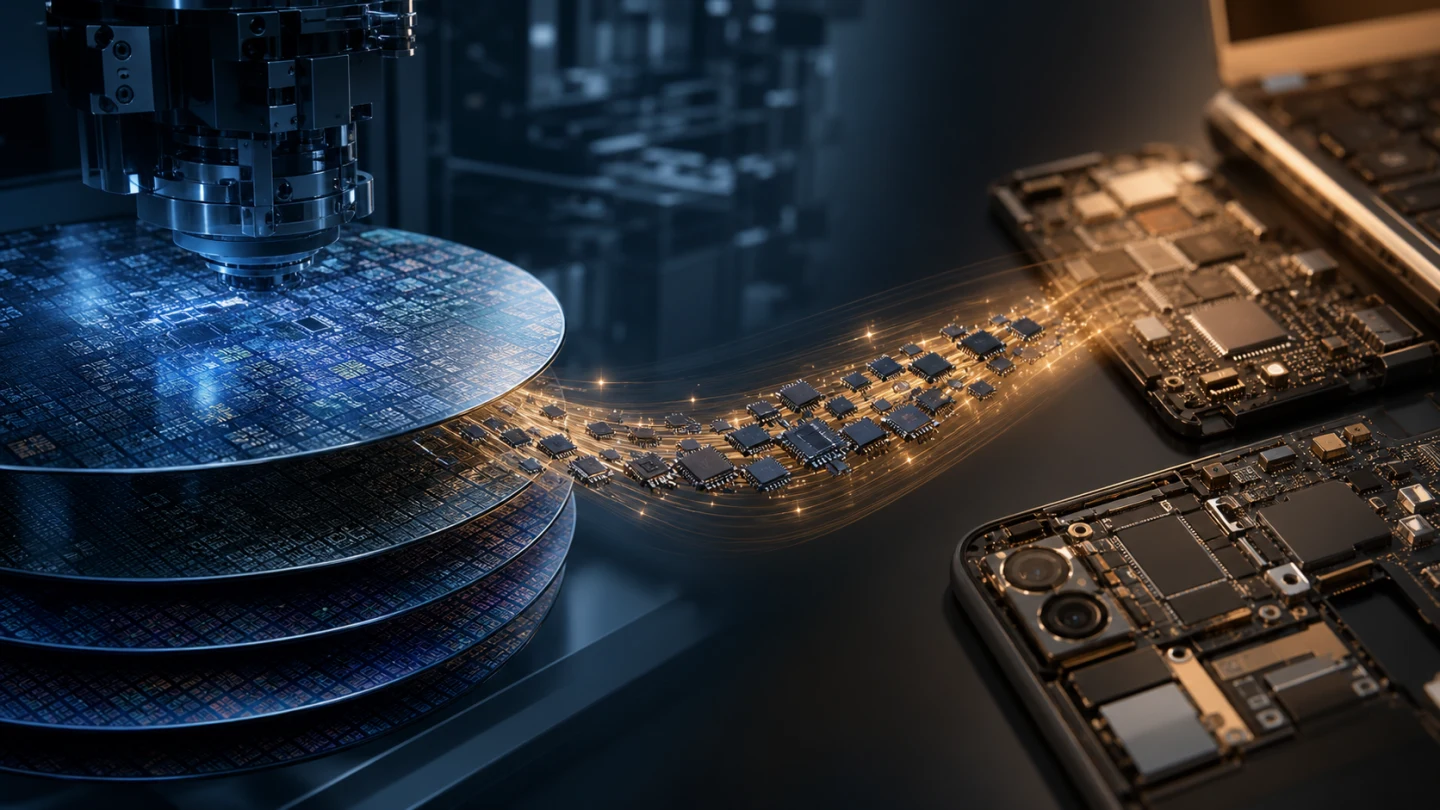
The catalyst
The AI build-out is reaching consumers through an unusually ordinary component: memory. Reports dated August 1 and 2 describe Samsung and SK hynix expanding multiyear supply agreements as customers seek firmer access to capacity, while laptops and smartphones are already becoming more expensive. An India report says selected smartphone brands may revise prices as RAM and NAND costs rise. The development matters because the same shortage can lift a memory maker’s demand while squeezing the companies that assemble or sell finished devices.News sourceskoreaherald.comthejapantimes.jptechlusive.in
The economic hinge is who controls supply, who can reprice a product, and who carries inventory while customers hesitate. Sahasra sits close to the input through memory products and packaging. GNG approaches it from the other side with warranted refurbished computers. Rashi is a boundary: distribution can benefit from pricing and stocking, but it does not own the component or manufacture the device.
In brief
What matters
- ScarcityMemory supply is being pulled toward AI and secured through longer contracts, shifting bargaining power toward suppliers with usable capacity and away from buyers exposed to spot procurement.
- Direct linkSahasra is the clearest Indian operating link because its disclosed memory solutions and packaging work sit inside the component chain, although its largest business remains EMS rather than memory alone.
- Demand shiftGNG’s refurbished-computer model can gain relative demand when new-PC prices rise, but its advantage depends on sourcing, inventory and the willingness of enterprises to accept refurbished equipment.
- BoundaryRashi Peripherals shows why revenue growth or favorable component pricing is not the same as structural memory exposure: a distributor adds reach while carrying working-capital and margin risk.
Company landscape
How the catalyst reaches listed businesses
Which Indian-listed companies are economically exposed to the AI-driven memory-supply squeeze through memory products, refurbished computing demand or electronics distribution?
The bottleneck moves down the stack
The reports describe two connected changes. AI systems are consuming more high-bandwidth memory and other advanced memory capacity, while major customers are seeking multiyear agreements that make access more predictable. The Japan Times describes the spillover into laptops and smartphones, and the saved India coverage reports possible price increases across several brands. These are reported market effects, not proof that every handset maker will reprice or that every supplier will earn more.News sourceskoreaherald.comthejapantimes.jptechlusive.in
Sahasra makes the upstream-to-product mechanism concrete. Its management describes four verticals—EMS, memory products, semiconductor packaging and IT hardware—and says the packaging activity primarily feeds the memory portfolio. The company also said memory shortages linked to AI had pushed customers toward alternate sources and reported an executable order book of about ₹68.5 crore as of March 31, 2026. That is company evidence of demand and positioning, not evidence that the broader shortage will persist or that all of the order book carries high margins.
Three ways the economics can travel
Sahasra’s attraction is directness, but its FY26 mix was still led by EMS, with memory solutions a smaller vertical. Eight SMT lines span Noida and Bhiwadi; management described Noida as roughly 80% utilised and Bhiwadi as roughly 20%. The upside case requires memory demand and productive conversion of available capacity. Customer concentration and packaging investment remain checks on the story.
GNG Electronics sits at the demand-side contrast. Its Electronics Bazaar business sources, refurbishes and resells enterprise-grade laptops and other devices with warranties. In its Q4 call, management cited an 8GB DDR5 module rising from $23.35 in October 2025 to about $120 in April 2026, alongside a shortage of critical components. The connection is conditional: expensive new hardware can widen the value proposition of refurbished equipment, but procurement and inventory discipline determine whether that becomes profit.
Rashi Peripherals defines the edge of the thesis. It distributes global technology brands through a pan-India network and reported FY26 growth from demand, channel stocking and favorable pricing in components and storage. That makes it a read-through on availability and price transmission, but does not establish memory manufacturing or proprietary supply. Its thin margins and inventory needs make working-capital disclosure more informative than a revenue jump.
What would confirm the read-through
The strongest evidence would be operational. For Sahasra, investors should look for memory revenue converting into cash, higher Bhiwadi utilisation, repeat orders and a return on packaging investment. Its portfolio remains mixed. A memory label alone cannot tell us whether it is capturing scarcity or passing through volatile component prices.
For GNG, the decisive facts are refurbished unit volumes, realisations, margin and cash conversion as new-device prices change. For Rashi, the test is whether stocking and pricing translate into stable margins without a disproportionate rise in inventory or finance cost. Across the chain, the central question is whether AI buyers continue to lock supply through 2027–28 or whether new capacity and weaker end demand release pressure. The conclusion is therefore a watch list, not a forecast of winners.News sourceenterpriseai.economictimes.indiatimes.com
Questions for the next filing
What would prove the connection?
- 1
Where does scarce memory create direct operating leverage?
- 2
Who can pass higher component costs through, and who absorbs them?
- 3
Which disclosures would show that the read-through is becoming material?
Risks and limits
What could break the argument?
- The saved news describes expected tightness through 2027–28, but it does not establish how quickly new capacity, weaker demand or contract changes could relieve the squeeze.
- Higher memory prices can be absorbed by assemblers, distributors or consumers; the saved reporting does not quantify pass-through, and company evidence does not prove that revenue growth will become higher margins.
- Sahasra’s customer concentration and investment needs, GNG’s inventory and cash requirements, and Rashi’s thin-margin distribution model can all weaken the read-through even if component prices remain elevated.
Keep following the thread
What we would check next
- Sahasra memory-product revenue, executable order conversion, Bhiwadi utilisation and operating cash flow
- GNG refurbished unit volumes, realisations, margin and inventory or finance-cost movement
- Rashi component-and-storage pricing, inventory days and distribution margin
- New memory capacity, multiyear contract terms and any reversal in smartphone or PC pricing
Have a catalyst or business question of your own?
Use CompanySweeper to find the companies behind it.
Try this question free →Research basis · 12 records reviewed
The narrative was checked against 7 company records and 5 topical sources. News links also appear beside the paragraphs that rely on them.
- Global Memory Chip Shortage: How the AI Boom Causes RAMaggedon2 August 2026
- Samsung, SK hynix expand binding memory supply deals amid prolonged shortage2 August 2026
- AI keeps consumer prices high in RAMaggedon chip crunch2 August 2026
- Samsung, Xiaomi, OPPO and more may raise smartphone prices1 August 2026
- SK Hynix Says Big Tech Pushes for Stable DRAM Prices Amid AI Surge1 August 2026
Research for idea discovery, not a recommendation to buy or sell securities.