 CompanySweeper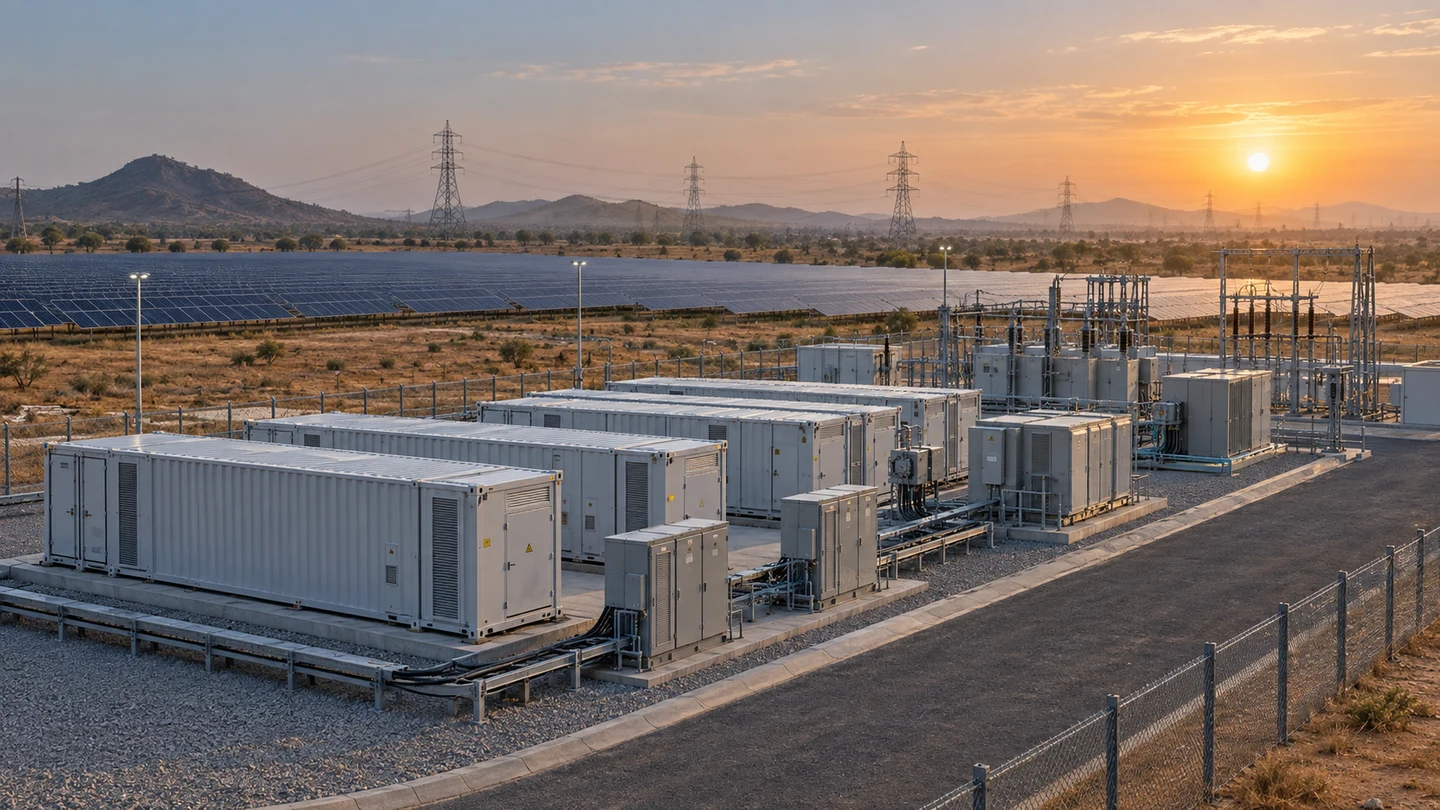
The catalyst
India installed 8.2 GWh of new battery energy storage capacity in the first half of 2026. Standalone batteries made up nearly 98% of quarterly additions, according to the saved industry report, while cumulative storage had moved far beyond the 98.4 MWh scale cited for the earlier market. That is a useful change in scale, even with Q2 additions falling 22% from Q1.News sourceess-news.com
Storage earns its place in the power system when it can shift electricity into the hours when the grid needs it, smooth renewable generation and meet a contracted delivery profile. That means the next business question is not whether India can announce more gigawatt-hours. It is whether manufacturers, project developers and EPC contractors can deliver systems that cycle reliably, win contracts and earn an acceptable return.News sourcepowerline.net.in
In brief
What matters
- The market is measurable8.2 GWh installed in six months is evidence of deployment, not merely a policy target. The quarter-on-quarter slowdown still matters because project timing can make a fast-growing market look uneven.
- The maker’s risk is ramp-upGP Eco has an indigenous 1 MWh system and a planned scale-up from 500 MWh toward 3 GWh. The test is factory commissioning, qualification and utilisation, not the headline capacity alone.
- Projects carry a different burdenOriana and Sterling & Wilson sit closer to project delivery. Their economics depend on contract quality, procurement, commissioning and working capital, so storage growth does not automatically translate into equipment-maker margins.
- Packs are not cellsMaxvolt’s pack-manufacturing model can address ESS customers without owning cell chemistry. That flexibility may speed deployment, but it leaves sourcing, certification, service and lifecycle economics as central questions.
Company landscape
How the catalyst reaches listed businesses
Which Indian-listed companies directly participate in or are materially exposed to the business changes created by this development: India installed 8.2 GWh of new battery energy storage capacity in H1 2026, with standalone storage accounting for most additions, showing a move into commercial deployment. Transmission mechanisms to examine: grid storage capacity expansion; renewable energy integration; power trading arbitrage opportunities. Distinguish direct operators and suppliers from merely a
The first bottleneck is turning capacity into working assets
GP Eco Solutions is the clearest equipment-side example in the saved company evidence. It designs, manufactures and commissions BESS and inverters under the Invergy brand. Its issuer presentation describes a fully indigenous 1 MWh system commissioned between October 2025 and April 2026, with 100% indigenous intellectual property. Management also describes a Giga factory intended to lift BESS capacity from 500 MWh toward 3 GWh by Q2FY27.
That is a useful way to read the 8.2 GWh market number. It creates room for local equipment, but a factory plan is not installed capacity and installed capacity is not recurring profit. The decisive disclosures will be commissioned lines, delivered MWh, customer mix, warranty provisions and whether manufacturing assets generate cash before the next expansion begins.
Developers and EPC firms sell the system around the battery
Oriana Power shows the project-developer route. Its issuer material describes a business that runs from solar generation through storage to energy consumption, with more than 800 MWh of BESS projects won or under execution and more than 2,000 MWh in the pipeline in the cited presentation. The company serves utility, industrial and commercial users, so the storage question sits inside a larger project and asset-ownership model.
Sterling & Wilson Renewable Energy adds an execution contrast. It designs and constructs utility-scale solar and hybrid projects, and its saved exchange filing describes work around integrated solar and battery-storage energy hubs. For an EPC contractor, the benefit of a bigger storage market arrives through awards and execution, but margin and cash conversion depend on procurement, commissioning and the owner’s rollout schedule.
The supply chain still has to prove its economics
Maxvolt Energy Industries occupies a narrower upstream role. It manufactures lithium-ion battery packs rather than cells, and its saved company evidence says the packs serve energy-storage systems alongside electric mobility and industrial applications. The company reports two manufacturing facilities, combined installed capacity of 600–750 MWh and a network that spans 16 states, with more than 31 OEM clients.
Pack manufacturing can be a practical bridge between imported cells and a local storage project, but it does not remove the hard parts. The business still needs dependable cell sourcing, certification, thermal management, warranty control and end-of-life handling. Maxvolt’s stated buyback, second-life and recycling ambitions make lifecycle service part of the thesis, though the next results and project disclosures must show whether that ambition is commercial or only strategic language.
Questions for the next filing
What would prove the connection?
- 1
Which listed companies actually manufacture, integrate or operate BESS rather than only mention storage in a product catalogue?
- 2
How do equipment, project-development and EPC roles differ in the path from installed storage capacity to revenue?
- 3
Which disclosures would show that storage demand is becoming repeatable business rather than a collection of announced projects?
Risks and limits
What could break the argument?
- The saved market report does not identify how much of the 8.2 GWh is contracted, merchant or already commissioned, so installed capacity should not be treated as a uniform revenue pool.
- Q2 additions fell 22% from Q1. That may reflect project timing, but it also leaves open the risk that procurement, financing or grid-connection bottlenecks are slowing the buildout.
- The issuer evidence supports company roles and plans, not future orders or returns. Battery costs, policy support, warranty claims and working capital can still change the economics of every layer.
Keep following the thread
What we would check next
- Quarterly disclosed BESS orders, delivered MWh and commissioning dates rather than only announced pipeline.
- GP Eco factory ramp-up, utilisation and warranty provisions as the planned capacity expands.
- Oriana and Sterling & Wilson order awards, gross margins, receivables and project-level cash conversion.
- Maxvolt’s ESS customer mix, cell sourcing, certification and evidence of paid lifecycle or recycling services.
Have a catalyst or business question of your own?
Use CompanySweeper to find the companies behind it.
Try this question free →Research basis · 10 records reviewed
The narrative was checked against 8 company records and 2 topical sources. News links also appear beside the paragraphs that rely on them.
Research for idea discovery, not a recommendation to buy or sell securities.